
More serum doesn’t mean better results: use it 2-3 times a week or after each wash, begin with a small amount, and apply it through damp lengths and ends rather than roots. Common hair serum application mistakes often start with overapplying, layering products without purpose, or expecting serum to do every job. This guide covers how to tailor the amount and placement to your hair type, layer leave-in products thoughtfully, and distinguish serum from heat protection.
Key Takeaways
- Start with a small amount, then adjust to your hair’s length, thickness, and texture to avoid a heavy finish.
- Focus application on damp lengths and ends; keep ordinary hair serum away from the roots.
- Layer leave-in products with intention, since applying too many can leave hair sticky or weighed down.
- Use a dedicated heat-protection product for hot tools unless your serum’s label specifically identifies it as a heat protectant.
1. Using the right amount and applying it to lengths and ends
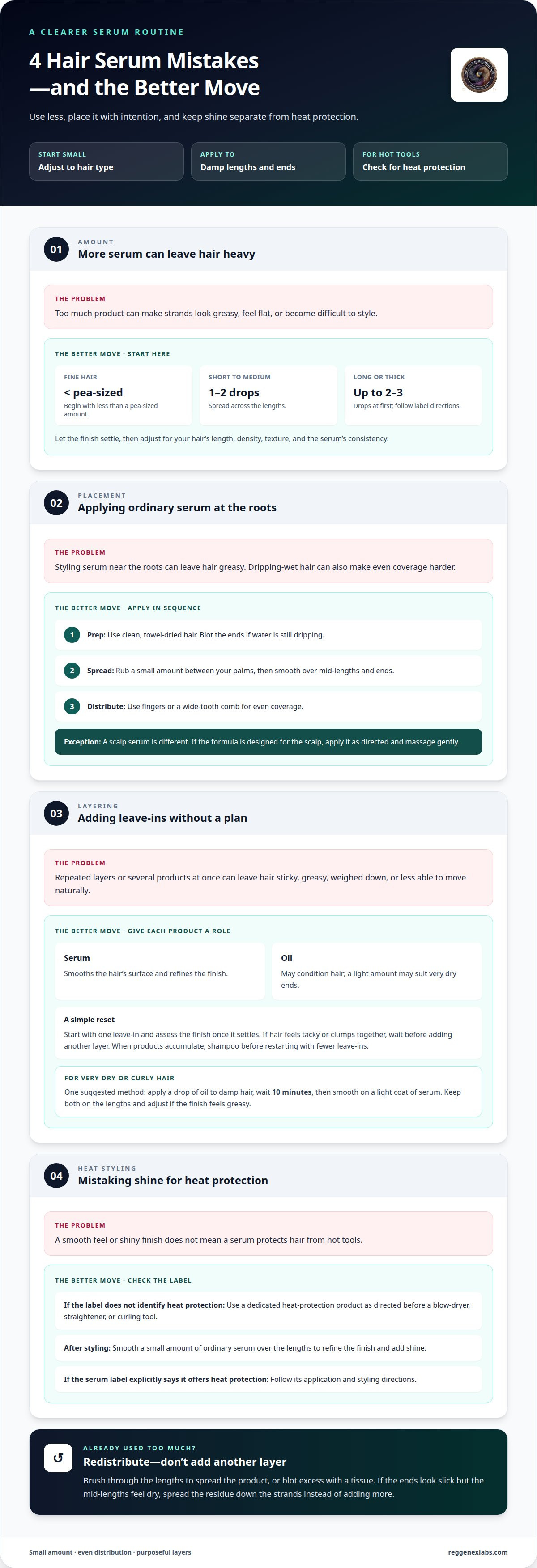
Apply serum to clean, towel-dried hair, distributing a small amount through the lengths and ends. Start with less than a pea-sized amount for fine hair; for long or thick hair, use no more than 2-3 drops. These are starting points, since hair type and the serum’s texture affect how much feels suitable.
To apply hair serum correctly, follow this sequence: towel-dry after washing, rub a small amount between your palms, then smooth it over the ends and mid-lengths. Use your fingers or a wide-tooth comb to distribute it evenly, keeping ordinary serum away from the roots.
For a styling serum, hair is often easiest to work with when it is damp, not dripping wet. Excess water can dilute the product and make even coverage harder, while completely dry hair may be harder to coat evenly. If water is still dripping from the ends, blot them with a towel first. This simple preparation can help prevent concentrated patches.
A small amount of styling serum can also smooth dry ends after the initial application. Avoid adding another full layer over product that is already there, as repeated application may leave strands sticky or heavy.
Scalp serums are an exception to the usual focus on lengths and ends. If a formula is designed for the scalp, apply it as directed and massage gently. Otherwise, keep styling serum away from the roots, where it can leave hair greasy. Fine or oily hair may suit a lighter formula, while thicker hair may tolerate a richer finish. Matching the product to its purpose and your hair type helps prevent common hair serum application mistakes.
2. Avoiding excessive layering of leave-in products
Each leave-in product should have a clear role in your routine. A styling serum smooths the hair’s surface and helps refine the finish, while an oil may condition the hair. Applying several leave-in products without a plan can coat the lengths rather than leave them soft. Hair may feel sticky, look greasy, or lose its natural movement.
Applying serum repeatedly over an existing layer can also cause buildup. Adding more at midday, for example, may make hair feel heavy if product is still on the strands. Start with one leave-in product and assess the finish once it has settled. If your hair feels tacky or clumps together, wait before adding another layer.
Serum and oil can be layered, but sequence and quantity matter. For very dry or curly hair, a light oil may help retain moisture. One suggested method is to apply a drop of oil to damp hair, wait ten minutes, then smooth on a light coat of serum. Keep both products focused on the lengths, and adjust the amount if the finish feels greasy.
Humidity can affect how layered products feel. In humid weather, several coatings may leave hair looking flatter or heavier; in dry conditions, a small amount of oil may suit dry ends. Change one product at a time rather than increasing every layer. That makes it easier to tell which step helps and which adds residue.
When products accumulate, washing helps reset the routine. Use shampoo to cleanse the hair before restarting with fewer leave-ins. For a coordinated wash-and-care routine, explore ReggeneX Vitalixir Shampoo. Then add products selectively, keeping serum and oil from competing on the same lengths.
3. Using the right amount of serum
The right amount of serum depends on your hair’s length, density and texture, as well as the product’s consistency. Start with the directions on the label, then assess how your hair feels and looks once styled:
- For fine hair, begin with less than a pea-sized amount. Fine strands can look greasy quickly when coated with too much.
- For short-to-medium hair, try 1-2 drops and spread them across the lengths.
- For long or thick hair, use no more than 2-3 drops at first. Add more only if the product instructions allow it and your hair still needs coverage.
Choose a formula based on your hair type and concern, not simply its brand name or price. Fine or oily hair often suits a lighter texture, while thicker strands may need more smoothing. For frizz, consider the finish and how evenly the serum distributes. A styling serum may reduce friction-related breakage, but it does not address internal causes of shedding.
More product won’t repair damage or make hair healthier by itself. Serum works on the hair’s surface, helping strands appear smoother and shinier; it can’t repair internal hair damage. A heavy coating may instead leave hair flat, difficult to style, or greasy. Excess product left on for long periods can also collect dust, pollution, and everyday debris.
If you’ve applied too much, brush through the lengths to redistribute it. You can also blot excess with a tissue, then avoid adding another layer. For example, if the ends look slick but the mid-lengths feel dry, spread the residue down the strands rather than adding more serum at the ends. Adjust your next application based on that result. A measured amount supports a polished finish without weighing down movement or disguising breakage. Start small, observe the finish, and refine the amount for your routine.
4. Separating serum use from heat protection
A common hair serum application mistake is assuming shine means heat protection. Serum can smooth the hair’s surface and add shine, but it is not a heat protectant unless the label specifically says it offers heat protection. Check the product’s intended use before blow-drying or using a straightener or curling tool.
If a serum does not claim to protect against heat, use a dedicated heat-protection product as directed before styling with hot tools. After styling, smooth a small amount of serum over the lengths to refine the finish and add shine. This keeps the protective step separate from the cosmetic one.
If the serum label explicitly says it offers heat protection, follow its application and styling directions. Do not assume a product protects hair from heat just because it feels smooth or coating. Applying an ordinary serum to damp hair before blow-drying, for example, does not replace a dedicated heat-protection product. Damp hair is a condition for application, not evidence of thermal protection.
Keep the routine simple: apply heat protection before using a hot tool, and reserve ordinary serum for the finish. Adding extra serum instead of a heat protectant may coat the hair without providing heat protection. Follow each product’s directions to avoid leaving the lengths feeling heavy.
Heat styling can contribute to dryness and damage, so keep each product’s role clear. Use a heat protectant for the styling step; serum is generally for surface smoothness and shine unless its label specifically says otherwise. Check the label before using a hot tool rather than relying on how the product feels.
For a serum that fits your hair-care routine, explore the hair regrowth serum, and use heat protection separately whenever its label doesn’t state otherwise.
ReggeneX Labs: ReggeneX Vitalixir Hair Regrowth Serum
ReggeneX Vitalixir Hair Regrowth Serum is a topical option for people seeking hair regrowth support, rather than only a styling finish. Keep its role distinct from ordinary cosmetic serum: follow its product directions and don’t treat it as heat protection unless the label says so.
If you are unsure how the serum fits your hair or scalp routine, the ReggeneX Vitalixir Hair & Scalp Consultation offers a personalized assessment and routine recommendations. It can help you consider your concerns and choose practical next steps instead of layering products at random.
For guidance on serum use or a routine tailored to your hair and scalp concerns, contact ReggeneX Labs.
Build a routine that feels intentional
Make your routine responsive, not more complicated. Notice how your hair feels after styling and between washes, then adjust one product or habit at a time. This makes it easier to see what supports your preferred finish and what adds unnecessary weight.
A measured approach can help distinguish cosmetic concerns from questions about scalp health or regrowth. ReggeneX Labs offers personalized hair and scalp consultations to help you consider your concerns and plan a routine. Avoiding hair serum application mistakes is one part of caring for your hair; your routine should also reflect what you want it to address.
For guidance on your next step, contact ReggeneX Labs today. Make one considered change, give your routine room to work, and keep moving toward hair care that feels right for you.
Frequently Asked Questions
How Often to Use It?
Fit styling serum into your existing routine rather than applying it automatically. You might use it after washing, or apply a small amount on days when your hair needs smoothing. Notice how your hair feels before the next wash. If residue builds up, pause use until your next wash instead of layering on more.
What Happens When You Use Too Much Serum?
Excess serum usually affects appearance and manageability. Hair may look limp or feel coated, and the finish may be harder to style. Treat serum as a surface product, not a repair treatment: using more will not restore internally damaged strands. A lighter application makes it easier to assess the finish without masking your hair’s natural movement.
What Should You Do If You've Applied Too Much?
If your hair still feels coated after redistributing the product, wash it before applying serum again. Shampoo can remove accumulated styling residue and provide a clean starting point. Avoid disguising the finish with more oil, conditioner, or styling products, as additional layers may make the coating more noticeable. Resume your routine when your hair feels clean.
Why Doesn't More Serum Always Fix Frizz?
Serum smooths the hair’s surface, but frizz can also be a sign of dryness. Adding more serum may coat the strands without addressing the cause, leaving hair slick while flyaways remain. For example, hair exposed to dry indoor air may benefit from moisturizing shampoo and conditioner as part of its wash routine. Consider why your hair feels rough before increasing the amount of styling product.
What are the most common mistakes when applying hair serum?
A common mistake is choosing a formula by brand or price instead of matching its texture and purpose to your hair. Not all serums do the same thing: a cosmetic finishing serum, a scalp formula, and a product labelled for heat protection have different roles. Read the directions and intended use before adding a product to your routine.
How much hair serum should you use for different hair lengths and types?
As a starting point, use less than a pea-sized amount for fine hair, 1-2 drops for short-to-medium hair, and no more than 2-3 drops for long or thick hair. Dispenser size and formula texture can affect how easily the product spreads, so distribute it across sections and judge the finish before adding any more.