Stress-related shedding can be temporary. To address how to stop acute stress hair shedding, start by responding to the stressor and supporting your overall health with consistent sleep, balanced meals, and gentle hair care. Seeing more hair come away than usual can still feel unsettling, even when shedding follows a temporary change in the hair cycle.
Acute telogen effluvium, a type of stress-related shedding, may start two to three months after a stressful event or a change in the body, and lasts fewer than six months. Stress can shift more hairs from active growth into a resting phase before they shed, while the follicles may remain able to produce new hair.
This article explains how stress can affect the hair-growth cycle, whether shed hair may grow back, and how stress-management habits can support recovery. It also covers why sudden, patchy, or persistent shedding merits attention, so you can respond thoughtfully instead of guessing at the cause.
Key Takeaways
- Stress-related shedding can follow a delay, so the timing of hair loss may offer clues about what changed.
- Learn how the hair-growth cycle helps explain why shedding may be temporary and when regrowth can become noticeable.
- Explore practical ways to support recovery, including steady sleep, balanced meals, and gentle hair care.
- Sudden, patchy, or persistent shedding may need professional evaluation rather than stress management alone.
Can hair grow back after stress-induced hair loss?
Yes, stress-related hair loss may be temporary, and hair can grow back once the cause is addressed. Telogen effluvium shifts more hairs into a resting phase, which is why shedding may appear after a stressful event.
Acute and chronic telogen effluvium
Telogen effluvium is shedding linked to a larger share of hairs entering the resting, or telogen, phase. Acute telogen effluvium lasts fewer than six months; chronic telogen effluvium continues for more than six months. These timeframes help you describe the course of hair loss, but the duration alone doesn’t establish its cause.
Stress can contribute to acute telogen effluvium, but illness or another change in the body may also precede shedding. When the trigger is addressed, most cases settle without treatment within six to eight months. New growth takes time to become visible, so persistent shedding or continued thinning warrants attention rather than the assumption that stress explains everything.
Diffuse shedding versus pattern hair loss
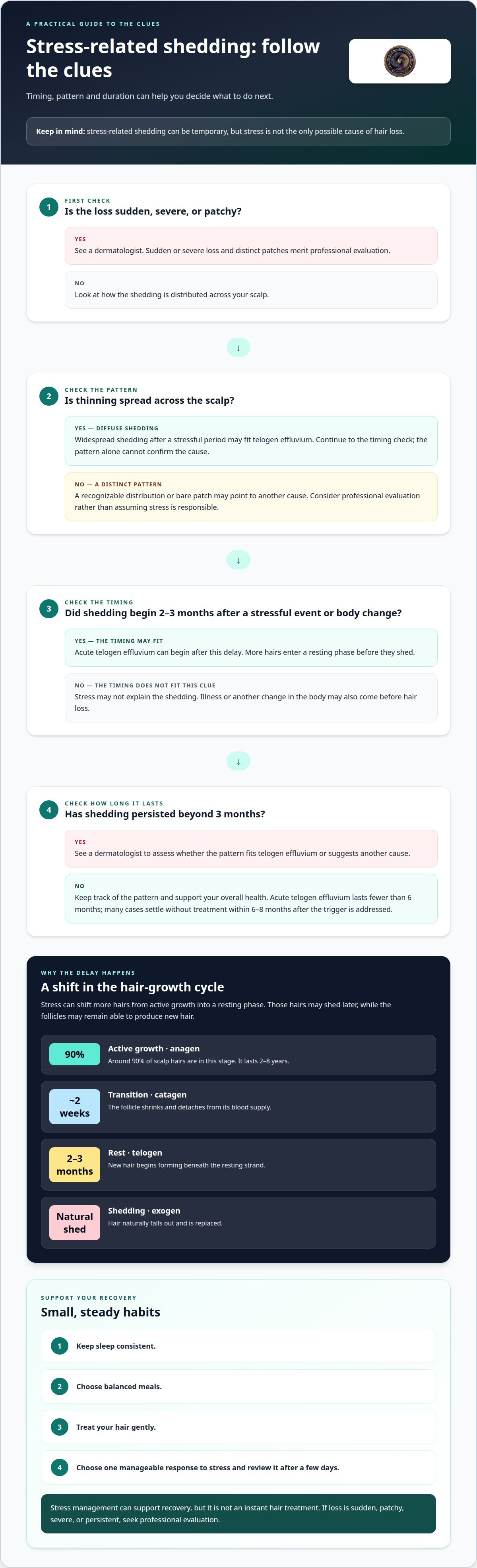
Telogen effluvium typically causes diffuse shedding, or thinning across the scalp rather than distinct bald patches. Pattern hair loss tends to develop in a more recognizable distribution. The distinction matters: widespread shedding after a stressful period may fit telogen effluvium, while a developing pattern may point to another cause.
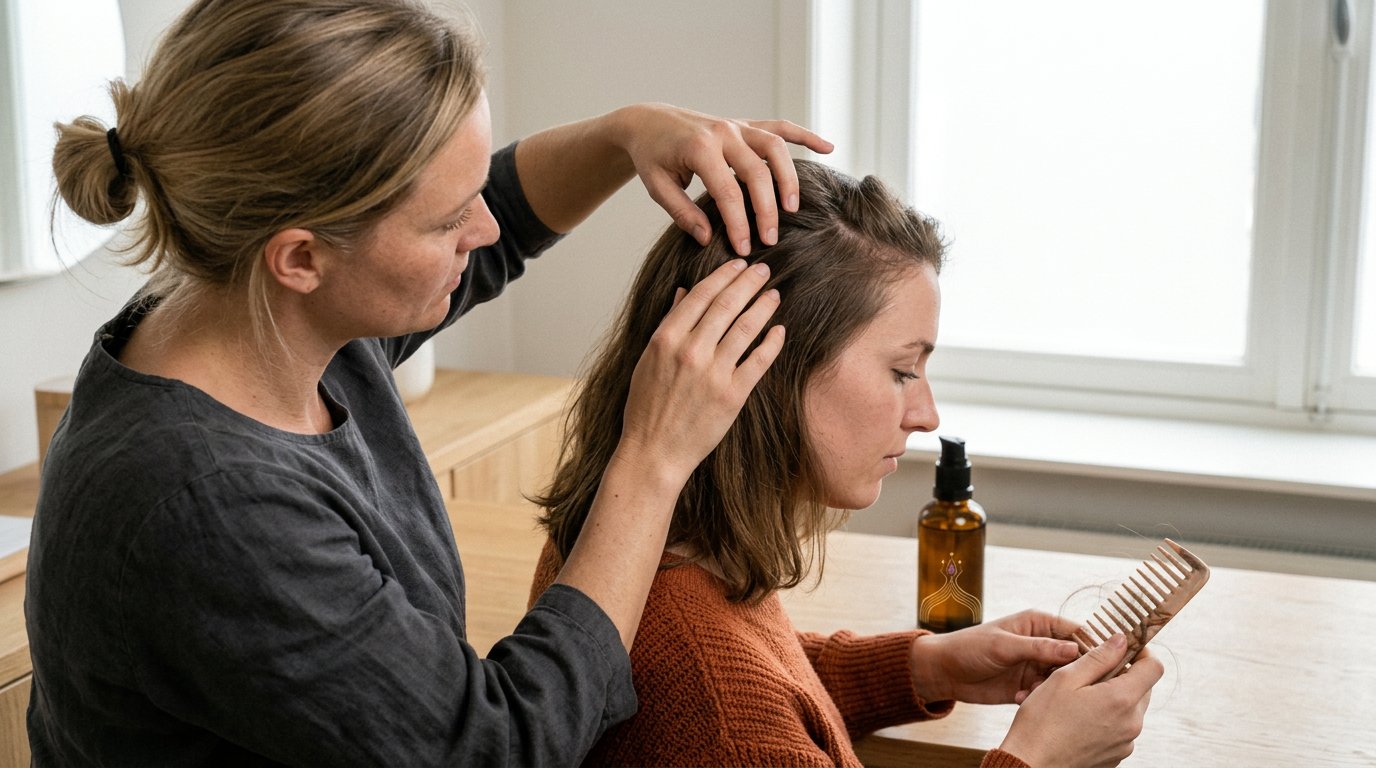
Pay attention to where density changes and how the loss develops. Hair coming away across the scalp during washing, for example, differs from a clearly defined bare patch. Stress and anxiety can make every loose strand feel alarming, but the pattern and timing offer more useful clues than one day’s shedding. Hair loss can also have more than one cause.
Timing and duration of stress-related shedding
How long after a stressful event does telogen effluvium start? It may begin two to three months after the stressor or a change in the body. This delay reflects the hair-growth cycle, so shedding may not start during the stressful event itself.
How long does stress-related hair shedding usually last? Telogen effluvium often lasts three to six months, while acute cases last fewer than six months. Once shedding eases, new growth may become noticeable. Recovery time varies with the trigger and the hair cycle.
See a dermatologist for sudden or severe hair loss, patchy loss, or shedding that persists beyond three months. A dermatologist can assess whether the pattern fits telogen effluvium or suggests another cause. An evaluation is particularly relevant if your hair doesn’t return to its usual pattern after you address stress.
How stress may alter the hair growth cycle
Stress can affect hair growth by shifting more follicles from active growth into a resting phase. The stages of the hair cycle help explain why shedding may follow a stressful event rather than begin immediately.
Stages of the hair growth cycle
The hair growth cycle moves through active growth, transition, rest, and shedding. During anagen, hair grows for two to eight years; around 90% of scalp hairs are in this stage. Catagen lasts about two weeks as follicles shrink and detach from their blood supply. Telogen is the resting phase, lasting two to three months, while new hair begins forming beneath the resting strand.
In exogen, hair naturally falls out and is replaced. These stages matter because telogen effluvium changes the timing: more hairs than usual enter the resting phase and shed later. The follicles don’t necessarily stop producing hair permanently. Increased shedding can therefore reflect a disrupted cycle, not the immediate loss of the follicles themselves.
Fight-or-flight responses and hair growth
The fight-or-flight response is the body’s reaction to stress and involves changes that may affect hair-cycle timing. High cortisol can trigger excess pro-inflammatory cytokines, which may interfere with the transition from telogen rest to anagen growth. This is one possible link between prolonged stress and shedding, though stress-related hair loss can have other causes.
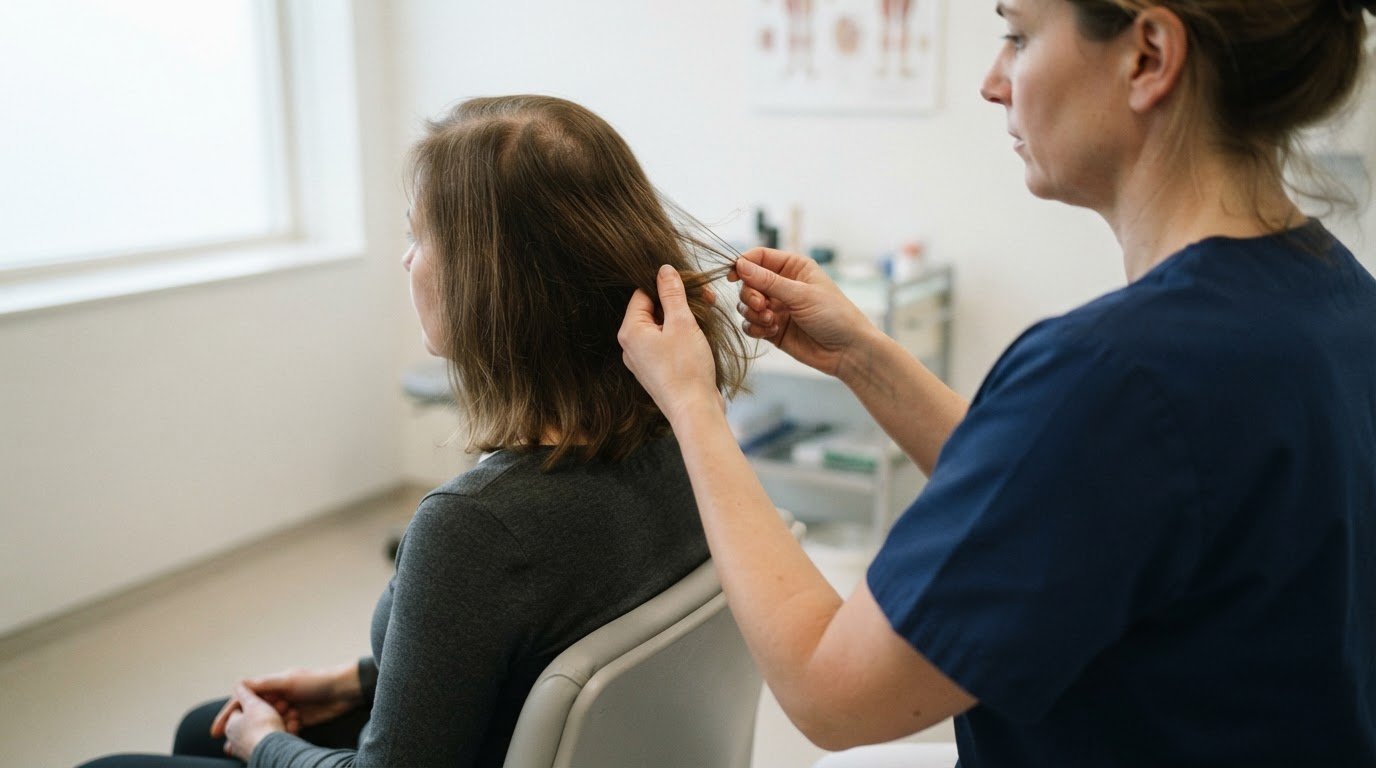
Stress may also coincide with illness, reduced appetite, or changes in eating habits. Insufficient iron or protein can contribute to hair loss, while eating too few calories can cause significant shedding. A blood test can help assess levels of certain vitamins or minerals before you take a hair-growth supplement. A clinician may also perform a hair-pull test, gently drawing a small clump of 40 to 60 hairs to assess shedding.
These checks can help distinguish a shift in the hair cycle from other contributing factors. If you’re wondering what tests a doctor may order, blood tests can assess certain nutrient levels, while a hair-pull test can evaluate active shedding. The appropriate assessment depends on your symptoms and health history.
Stress management
Managing stress isn’t an instant hair treatment. It can, however, make daily pressure more manageable. Small, repeatable changes can help you respond to emotional strain without making hair recovery another source of stress.
Stress-management practices
Begin by identifying the situations that create the most pressure. For a week, note stressful moments and what was happening, such as a difficult work deadline or a tense conversation. This simple record can reveal recurring triggers and help you choose a realistic response.
Break a demanding task into smaller steps. If a work project feels overwhelming, choose the next specific action and set a boundary for when you’ll stop for the day. You can also ask someone you trust for practical support, such as sharing a task or listening while you talk through a concern.
Managing stress to support hair recovery
If you’re wondering how to stop acute stress hair shedding, focus first on pressures you can influence rather than trying to control every strand. Choose one change you can maintain, such as setting a clear end to work messages or delegating a recurring responsibility. Review it after a few days and adjust if it adds pressure.
Monitor your hair in a measured way. Repeatedly checking your scalp or counting shed strands can make worry more consuming without revealing the cause. Instead, note noticeable changes at consistent intervals and share those observations with a professional if needed. A calm record is more useful than daily scrutiny.
A practical approach to how to stop acute stress hair shedding also recognizes when anxiety needs attention in its own right. If emotional strain disrupts your relationships, work, or daily responsibilities, speak with a healthcare professional about support. Stress management doesn’t replace an assessment of persistent or unusual hair loss, but it can be part of a considered response.
Stress and hair shedding
Stress can accompany several forms of hair loss, but the pattern offers clues. Telogen effluvium often causes diffuse thinning, while alopecia areata can create distinct bald patches. Trichotillomania involves an irresistible urge to pull hair from the scalp, eyebrows, or other areas. These conditions have different causes and may call for different responses.
With telogen effluvium, shedding may become more noticeable during washing or brushing. People commonly lose 50 to 100 strands daily, while telogen effluvium can involve up to 300 strands per day. A larger amount can feel alarming, but the number alone cannot identify the trigger or prove stress is responsible.
Alopecia areata is different: the immune system attacks hair follicles, causing loss that can appear in patches. Severe stress may be associated with this condition, but it isn’t the only possible cause. Patchy loss, rather than an even reduction in volume, is a reason to seek medical assessment.
Stress can also be associated with hair pulling. Trichotillomania may involve pulling in response to tension, loneliness, boredom, or frustration. Notice whether loss appears in areas you can reach or has an uneven pattern. This can help explain your concern during a medical evaluation without assuming the behaviour is simply a habit.
Sudden or severe shedding warrants attention, especially alongside patchy loss or a marked change while washing or combing. A dermatologist can assess your scalp, shedding pattern, and possible causes. Treatment depends on the diagnosis: a stress-management routine alone won’t address every form of alopecia, and hair-care products can’t replace medical assessment.
The key takeaway: consider stress as one possible trigger, not a diagnosis. Track when shedding began and whether thinning is diffuse or patchy. If the pattern changes or the loss feels sudden and severe, arrange a medical evaluation to identify the cause and guide care.
ReggeneX Labs
ReggeneX Labs can help you build a considered hair-care routine while you address possible stress-related shedding. The ReggeneX Vitalixir Hair & Scalp Consultation offers personalized guidance and routine recommendations to help you think through scalp care and suitable next steps.
For ongoing care, the ReggeneX Vitalixir Hair Regrowth Serum, ReggeneX Vitalixir Shampoo, and ReggeneX Vitalixir Conditioner are options in the hair-care range. They can support a consistent routine, but they don’t replace medical assessment when shedding is sudden, patchy, or persistent. Identifying the cause remains central to choosing appropriate care.
For personalized guidance on a routine suited to your hair and scalp needs, contact ReggeneX Labs.
Choose a steady next step for your hair care
Hair recovery takes patience and a plan you can sustain. Instead of reacting to every change in shedding, focus on a consistent routine and note how your scalp and hair respond over time. This can help you make thoughtful decisions about how to stop acute stress hair shedding without adding unnecessary products or pressure.
The ReggeneX Labs team offers personalized hair and scalp evaluations with routine recommendations to help turn your observations into a practical plan. This guidance can help you consider your care needs in the broader picture, while sudden, patchy, or persistent loss remains a reason to seek medical assessment.
Contact ReggeneX Labs to discuss your hair-care questions and find a considered next step. Move forward with care, consistency, and confidence.
Frequently Asked Questions
Can Anxiety Cause Hair Loss?
Anxiety can accompany stress-related shedding and may also be associated with hair-pulling behaviour. Notice whether you repeatedly twist or pull your hair during tense moments, as this differs from shedding across the scalp. If loss appears in distinct patches or feels sudden and severe, seek medical assessment rather than assuming anxiety is the only cause. Addressing emotional strain can be one part of care.
What helps regrow hair lost from stress?
Hair regrowth begins with addressing factors associated with shedding and supporting general health. Eat balanced meals, avoid severe calorie restriction, and handle fragile strands gently. If you’re considering supplements, a blood test can first assess certain nutrient levels. Continued thinning despite changes in stress or routine warrants medical evaluation, as another condition or contributing factor may need attention.
What is telogen effluvium?
Telogen effluvium is a type of hair shedding in which more hairs than usual enter the resting phase of the hair cycle. Shed hairs may appear across the scalp rather than in one clearly defined patch. Before an appointment, note whether the change affects your overall volume, particular areas, or both, along with any recent health or life changes.
What causes acute stress-related hair shedding (telogen effluvium)?
Acute telogen effluvium can follow a significant physical or emotional stressor. Possible preceding events include surgery, childbirth, an illness, or an emotionally difficult experience. A change in the body can also be relevant, so emotional stress isn’t always the only cause. Note recent health events and changes in eating or medication routines to give a clinician useful context.
Can stress-related hair loss be stopped or reversed?
Stress-related shedding can settle when its trigger is addressed, and lost hair may grow back. First, determine whether the loss fits a temporary shedding pattern or another condition. Don’t rely on stress reduction alone if you notice bald patches, sudden severe loss, or ongoing thinning. A clinician can assess the pattern and guide appropriate care.
What steps can help reduce shedding and support hair regrowth after stress?
Start with steady habits: protect your sleep, eat regular balanced meals, and choose gentle styling that doesn’t pull on your hair. Avoid adding several supplements at once; a blood test can identify certain nutrient levels before you consider supplementation. Track where shedding occurs and any recent health changes. These notes can help a clinician assess possible causes and determine suitable next steps.